The Superhero Dad as Cultural Mirror
The image of a Black father in Western media has long suffered from caricature, neglect, or outright absence. In contrast to mainstream portrayals that often emphasize paternal disengagement or dysfunction, the superhero genre—traditionally a space of myth and metaphor—offers a surprising canvas upon which to project both the trials and triumphs of Black fatherhood. As Juneteenth, Father’s Day, and contemporary calls for Black visibility converge, there has never been a better time to explore the meaning of Black fatherhood through the capes and conflicts of comic books.
Superheroes may be fictional, but the narratives they tell shape real-life expectations, anxieties, and aspirations. As educators, counselors, and citizens, we must ask: What does it mean when a Black man dons a cape—not just to save the world, but to raise a child? What lessons can be drawn when a hero’s true test is not in battle, but in fatherhood?
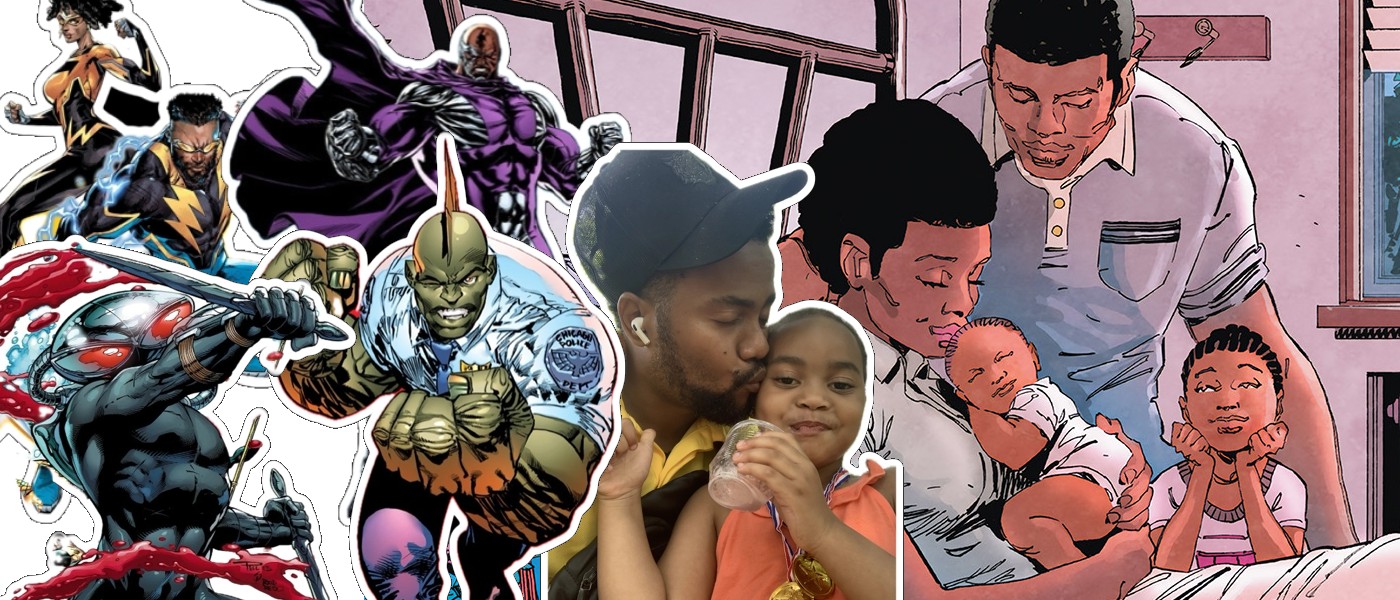
Drawing on personal experience, counseling insight, and pop culture criticism, this article focuses on three positive portrayals—Black Lightning (Jefferson Pierce), Luke Cage, and Malcolm Dragon—and three negative or complex figures—Kibuka, Black Manta, and Despot—as featured in Fraser’s (2019) World of Black Heroes profile, “You Are the Father! Black Superhero Dads You Should Know.”
Why Representation of Black Fatherhood Matters
In philosophy, identity is not just about self-conception; it is also about recognition—how we are seen and acknowledged by others (Honneth, 1995). For Black men, that recognition has too often come filtered through tropes: the absentee father, the hyper-violent male, the emotionally distant patriarch. Yet empirical studies reveal that Black fathers are more likely to be involved in their children’s day-to-day lives than commonly portrayed (Jones & Mosher, 2013). The problem is not behavior—it’s representation.
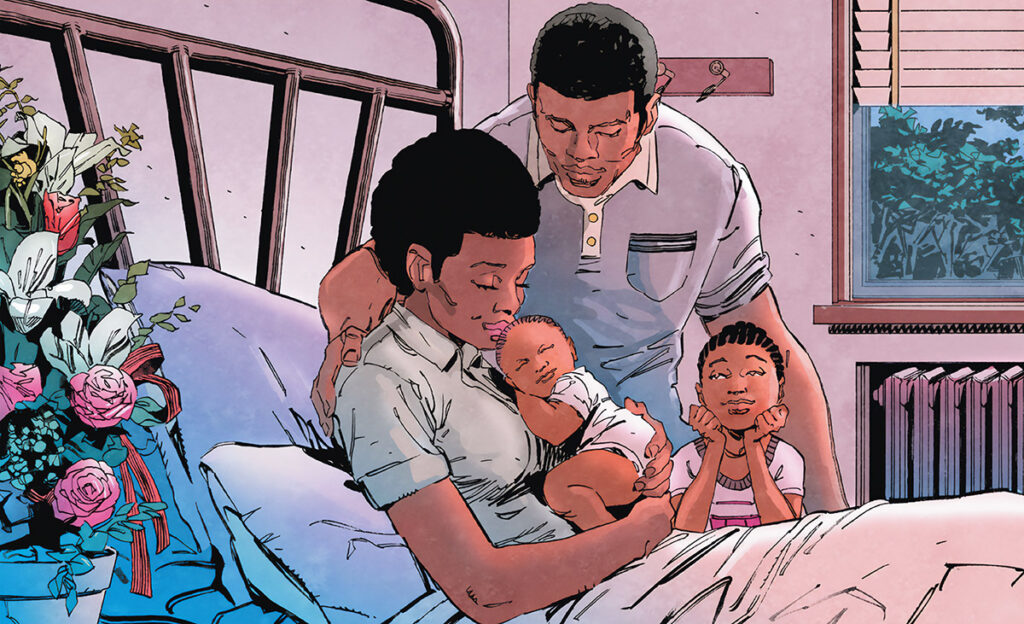
Superhero media, with its global reach, helps shape those representations. A character like Jefferson Pierce (Black Lightning), a high school principal, educator, and father of two superpowered daughters, directly contradicts the stereotype. He is protective yet empowering, stern yet emotionally open. As a single father in the CW’s Black Lightning series, he becomes not just a symbol of Black excellence, but of Black nurturing masculinity.
Positive Archetypes: Fathers Who Lead with Love and Power
Jefferson Pierce / Black Lightning
Perhaps the most compelling depiction of a Black father in superhero media, Jefferson Pierce embodies what Cornel West (1993) calls “deep love for the people.” His battles are not just against villains but against systems—racism, police brutality, and educational neglect. He raises Anissa and Jennifer, not to emulate him, but to discover and define their own paths.
He balances mentorship and discipline, regularly affirming their worth even in moments of conflict. In counseling terms, Pierce models what Carl Rogers (1957) identified as unconditional positive regard—creating a space where his daughters feel seen, loved, and challenged to grow.
Luke Cage
While better known for his bulletproof skin, Luke Cage’s most important evolution is as a father. His relationship with his daughter, Danielle, is not simply decorative—it’s transformative. Luke’s decision to prioritize fatherhood over his heroic duties in several storylines suggests that for Black men, caregiving is heroic.
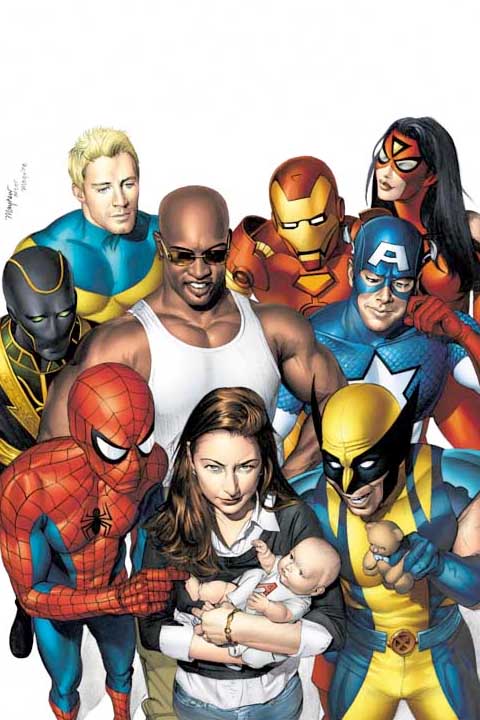
He also navigates co-parenting with Jessica Jones, illustrating real-world dynamics that many readers recognize: negotiating parenting styles, shared custody, and emotional labor. Luke Cage offers an alternative to the stoic Black male archetype—he is present, emotionally responsive, and imperfect.
Malcolm Dragon
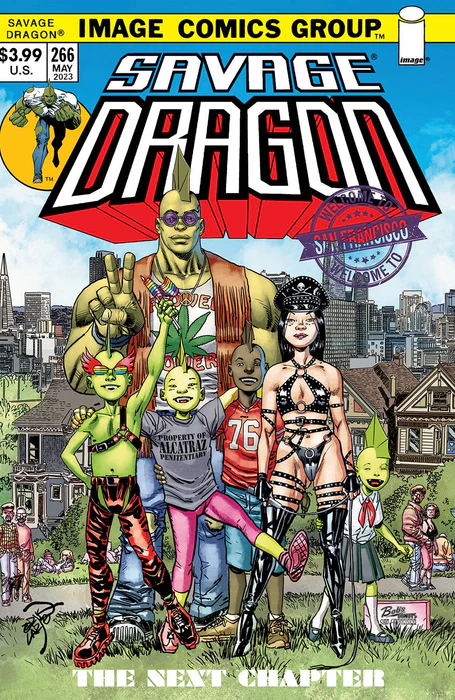
The son of the original Savage Dragon, Malcolm Dragon inherits not only powers but responsibilities. He takes on parenting in the Savage Dragon series in ways that are often comedic, messy, and human. His character underscores a vital truth: Black fatherhood doesn’t need to be flawless to be valued. It needs to be visible, engaged, and real.
Complex and Negative Depictions: Shadows of Power and Pain
Black Manta
One of the most tragic figures in superhero lore, Black Manta is the father of Jackson Hyde (Aqualad). Their relationship is strained, and Manta’s cold, abusive nature drives Jackson toward Atlantean mentorship and ultimately heroism. The tension reflects a recurring narrative: sons who must become what their fathers could not.
In counseling, this is known as intergenerational resilience—where individuals overcome adverse parenting through oppositional modeling (Walsh, 2016). Jackson Hyde becomes a compassionate, thoughtful hero precisely because he refuses to replicate his father’s destructive path.
Despot
Despot, a lesser-known but chilling character from the Wildstorm universe, is the father of Battalion (Jackson King). Despot uses manipulation and violence to control his son and the world around him. He symbolizes not only the tyrannical father, but also the shadow side of power unmoored from morality.
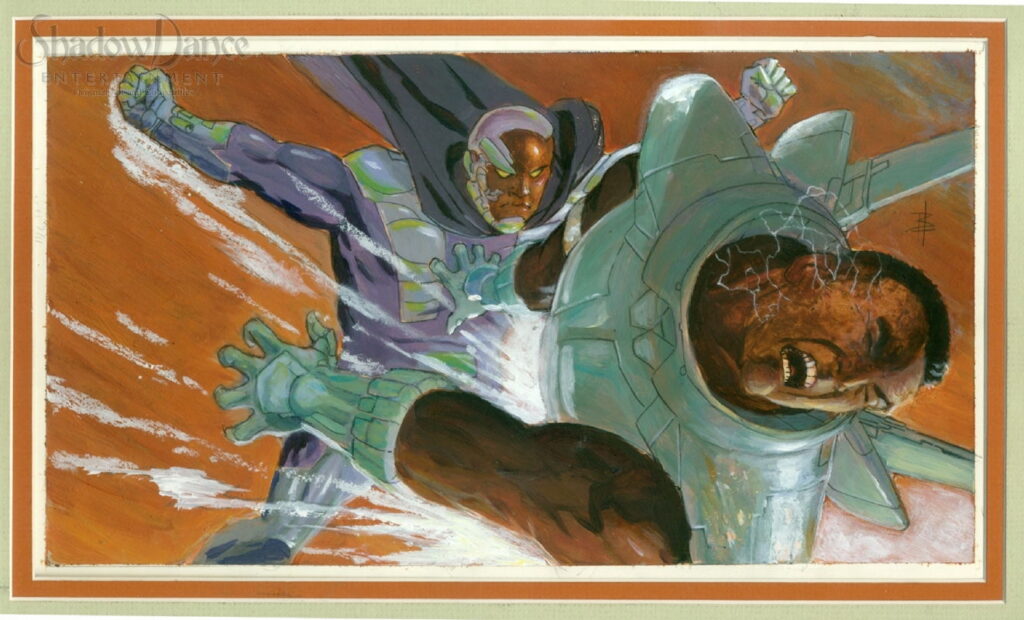
His portrayal serves as a warning: fatherhood without empathy becomes domination. It resonates with themes in Freire’s Pedagogy of the Oppressed (1970), where unchecked authority dehumanizes both oppressor and oppressed.
Kibuka (Father of Kasper Cole)
In Christopher Priest’s Black Panther series, Kibuka is introduced as the complex and emotionally distant father of Kasper Cole, the biracial police officer who temporarily dons the mantle of Black Panther. While not abusive or villainous in the traditional comic book sense, Kibuka represents a more nuanced form of paternal neglect—one rooted in emotional repression and generational silence (Fraser, 2019).
His character embodies the impact of fathers who are physically present but emotionally unavailable, a dynamic many Black families recognize. Kibuka is a former soldier and traditionalist, bound by honor, pride, and a belief in tough love. However, his stoicism borders on alienation, leaving Kasper to seek validation through power, justice, and external recognition.
In psychological terms, Kibuka mirrors what Bowen (1978) called an “emotional cutoff,” where unresolved emotional tensions in parent-child relationships lead to silence, distance, or avoidance. Kasper’s journey, then, is about filling that silence—becoming a symbol of justice not through inheritance, but through resistance and reinvention.
Counseling Reflections: Lessons from the Superhero Genre
From my experience as a counselor and educator, I have consistently witnessed how media representations—particularly those in popular culture—have the power to either reinforce or resist dominant social narratives. Superhero stories, while fictional, often become symbolic frameworks through which individuals, especially young men, understand power, identity, and belonging. When Black fathers are depicted as layered, nurturing, and complex—whether flawed or aspirational—these portrayals provide valuable opportunities for psychoeducational dialogue, self-reflection, and healing.
Superheroes as Archetypes in Therapeutic Dialogue
Superhero narratives can be highly effective tools in therapy, especially with adolescents and young adults. Characters like Black Lightning or Luke Cage serve as modern-day archetypes—mirrors for internal conflicts about responsibility, masculinity, and fatherhood. In sessions, clients often resonate with these figures not because of their powers, but because of their personal struggles. Jefferson Pierce’s challenge to balance protecting his community while raising empowered daughters becomes a point of entry to talk about emotional regulation, boundary setting, and cultural expectations of strength.
Similarly, a client who has experienced abandonment or emotional distance from a father may find deep symbolic resonance in the story of Jackson Hyde and Black Manta. Using such narratives in a therapeutic setting allows the client to explore unresolved wounds without immediately confronting autobiographical pain. This process, sometimes called externalization in narrative therapy (White & Epston, 1990), can lead to safer, deeper emotional processing.
Father Wounds and Intergenerational Patterns
The stories of Despot and Kibuka bring to light another important aspect of counseling: the intergenerational transmission of trauma and emotional modeling. Despot’s authoritarian rule over his son Jackson King is an exaggerated metaphor for real-world patterns of emotional manipulation or control sometimes present in family systems. Similarly, Kibuka’s stoic detachment represents the damage of emotional inaccessibility—fathers who are physically present but emotionally withdrawn.
In therapeutic work, such dynamics often show up as attachment injuries, which can manifest in clients’ romantic relationships, professional life, or even parenting styles. Clients raised by emotionally unavailable or inconsistent fathers often develop anxious or avoidant attachment styles (Bowlby, 1982), leading them to either hyper-seek validation or avoid intimacy altogether. Recognizing these patterns through familiar and relatable characters allows for cognitive reframing and encourages clients to break harmful cycles rather than repeat them.
The Myth of Invulnerability: Deconstructing Toxic Masculinity
Many superhero fathers, particularly Black ones, are written into narratives that resist toxic masculinity. Unlike traditional depictions of fathers as distant and disciplinarian, characters like Malcolm Dragon are emotionally expressive, present in their children’s lives, and visibly overwhelmed at times. This normalized depiction of imperfection and vulnerability is a powerful counter-narrative, especially in cultures where Black men are socialized to hide emotional pain.
Counseling spaces must be attuned to the cultural stigma surrounding mental health among Black fathers. Using culturally resonant stories to model emotional literacy and validate the full emotional range of Black men can lower resistance to therapy. Moreover, it allows clients to reimagine fatherhood not as a role to perform with perfection but as a relationship to grow in—with grace, correction, and self-compassion.
Fatherhood as an Ongoing Practice, Not a Fixed Role
In sessions with fathers, I often reframe fatherhood not as a singular achievement but as an ongoing practice. This aligns with both humanistic and cognitive-behavioral frameworks: the belief that growth is continuous and identity is shaped by values and choices, not by past failures alone (Rogers, 1951; Beck, 1976). Whether discussing Luke Cage’s co-parenting journey or Jefferson Pierce’s challenges in navigating his daughters’ independence, these narratives help fathers understand that “showing up” emotionally and consistently is a core part of healing familial bonds—even when mistakes have been made.
Clients also benefit from understanding the difference between discipline and domination, a theme seen clearly in the contrast between Black Lightning and Despot. The former sets boundaries rooted in love; the latter imposes control rooted in fear. This thematic contrast becomes a launching pad to discuss authoritative parenting—which research shows to be the most effective style in promoting emotional health and autonomy in children (Baumrind, 1991).
Hope, Redemption, and Legacy
Finally, superhero narratives present one of the most enduring therapeutic gifts: hope. Even the most morally complex characters like Spawn—a hellspawn seeking redemption—underscore the possibility of change. Fathers who have failed in the past, who carry guilt or shame, can find comfort and motivation in these stories. They are reminded that it is never too late to repair relationships, seek forgiveness, or model change.
Therapists, educators, and community leaders can harness these symbols of redemption to support clients in rewriting their own family legacies. The act of being a “hero” to one’s child, we might say, does not require superpowers—just the courage to be present, accountable, and human.
Fathers Beyond Fiction
In the real world, Black fathers are educators, mentors, protectors, dreamers, and—sometimes—strugglers. But they are not absent by default, nor unworthy of celebration. They are, as in the comics, both heroic and human.
By uplifting superhero dads like Jefferson Pierce or Luke Cage during cultural observances such as Father’s Day and Juneteenth, we reclaim the narrative of Black fatherhood. And by confronting characters like Black Manta or Despot, we also create space for honest dialogue about pain, accountability, and healing.
Let us use these stories not simply to entertain, but to enlighten—to show boys and men that love, presence, and integrity are superpowers too.
References
Fraser, R. (2019, June 16). You Are the Father! Black Superhero Dads You Should Know. World of Black Heroes. https://worldofblackheroes.com/2019/06/16/you-are-the-father-black-superhero-dads-you-should-know/
Freire, P. (1970). Pedagogy of the Oppressed. Herder and Herder.
Honneth, A. (1995). The Struggle for Recognition: The Moral Grammar of Social Conflicts. MIT Press.
Jones, J., & Mosher, W. D. (2013). Fathers’ involvement with their children: United States, 2006–2010. National Health Statistics Reports, 71. Centers for Disease Control and Prevention.
Rogers, C. R. (1957). The necessary and sufficient conditions of therapeutic personality change. Journal of Consulting Psychology, 21(2), 95–103.
Sartre, J.-P. (1943). Being and Nothingness. Washington Square Press.
Walsh, F. (2016). Strengthening family resilience (3rd ed.). Guilford Press.
West, C. (1993). Race Matters. Beacon Press.