Why TRIBE Matters Today
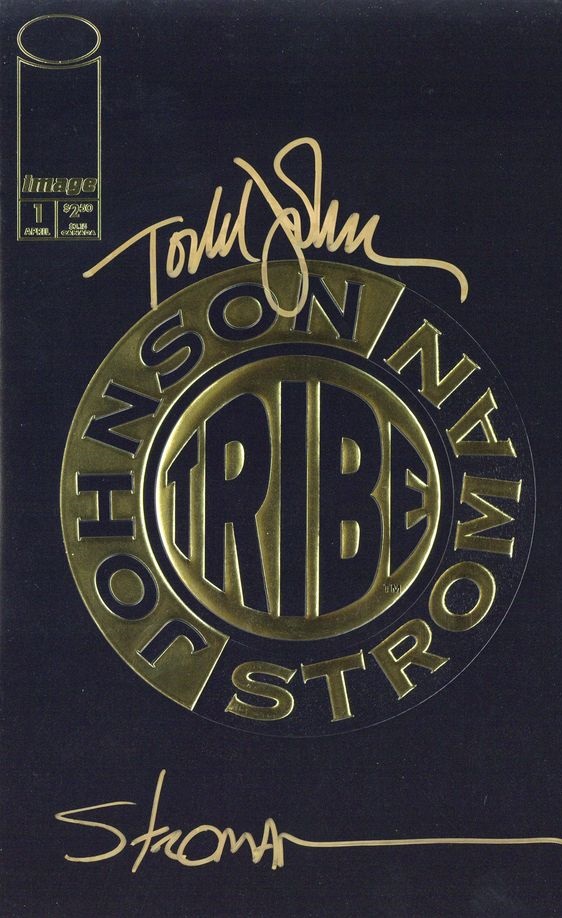
When I think about the comic TRIBE, first published in 1993 by Larry Stroman and Todd Johnson, I don’t just see another superhero book from the speculative boom of the early ’90s. I see a moment — a cultural marker — that continues to resonate three decades later. It was the first Black-created comic book to sell over a million copies, a feat almost unthinkable at the time. But more than numbers, TRIBE symbolized a bold claim: that Black voices, aesthetics, and stories could define not just a niche corner of the comics industry, but shape the mainstream itself.
To this day, TRIBE feels like a work of defiance and vision. At a time when the industry was flooded with flashier-than-life heroes from Marvel, DC, and the new juggernaut Image Comics, Stroman and Johnson offered something radically different. Here was a book unapologetically rooted in Black creativity, style, and sensibilities. It looked different. It read different. It refused to imitate the dominant voices of comics, instead putting forward its own.
As an educator, counselor, and art historian, I often return to TRIBE not just as an artifact of comics history, but as a cultural text that raises questions about representation, identity, and empowerment. Why did it connect with so many readers at the time? Why does its legacy remain strong despite its short-lived run? And what lessons does it leave for us about the importance of telling stories outside of dominant cultural narratives?
In today’s media landscape, where conversations about diversity and inclusion are both celebrated and contested, revisiting TRIBE gives us a chance to reflect on how Black creators have shaped — and continue to shape — the imagination of popular culture.
Historical Context – Image Comics, Black Creativity, and 1990s Representation
To appreciate the significance of TRIBE, we have to step back into the early 1990s. The comics industry was in a period of upheaval. Image Comics had just burst onto the scene, founded by superstar artists who broke away from Marvel to take ownership of their creations. The mood of the industry was electric: creators wanted freedom, readers craved new styles, and the market was booming with speculative collectors buying up first issues.
It was into this fertile ground that Larry Stroman and Todd Johnson launched TRIBE. Unlike the flash of speculative “event comics,” TRIBE was historic because it was created, written, and drawn by Black creators who centered Black characters unapologetically. It wasn’t about inserting a token hero into a mainstream book — it was about crafting an entire world from a Black perspective. That in itself was revolutionary.
Representation in the early ’90s mainstream superhero landscape was thin. Yes, Marvel and DC had characters like Black Panther, Storm, Luke Cage, and John Stewart, but they were usually written by white creators, and often their stories were filtered through the lens of companies more interested in marketability than authenticity. With TRIBE, Stroman and Johnson offered readers something different: characters who moved, spoke, and looked like people from the world Stroman grew up in. The rhythm of the dialogue, the Afrocentric design elements, and the unapologetic Blackness of the book set it apart.
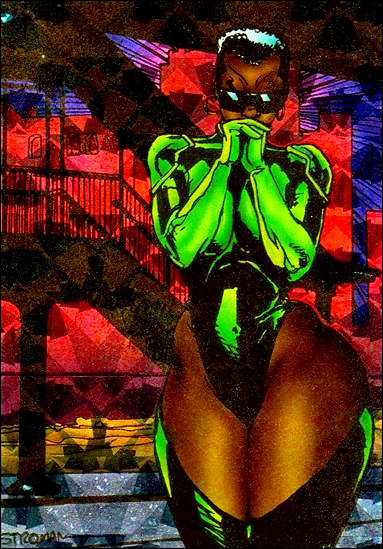
Even within Image Comics — a publisher founded on creator freedom — TRIBE was unique. While Image’s other breakout titles (Spawn, Youngblood, WildC.A.T.s) leaned into extreme aesthetics and splash-page bravado, TRIBE fused avant-garde visuals with cultural specificity. Stroman’s art wasn’t polished in the “house style” of Jim Lee or Todd McFarlane; it was jagged, kinetic, and infused with visual rhythms that drew on traditions outside of standard superhero art.
That first issue sold more than a million copies, making TRIBE the best-selling comic book created by Black creators at the time. But beyond the sales figures, what mattered most was the message: Black creators could not only compete in a crowded industry — they could dominate.
For readers, especially Black readers, TRIBE was more than entertainment. It was affirmation. It said: our stories matter, our art has power, and our communities deserve to be centered in the worlds of imagination.
Artistic Qualities – Larry Stroman’s Visual Language
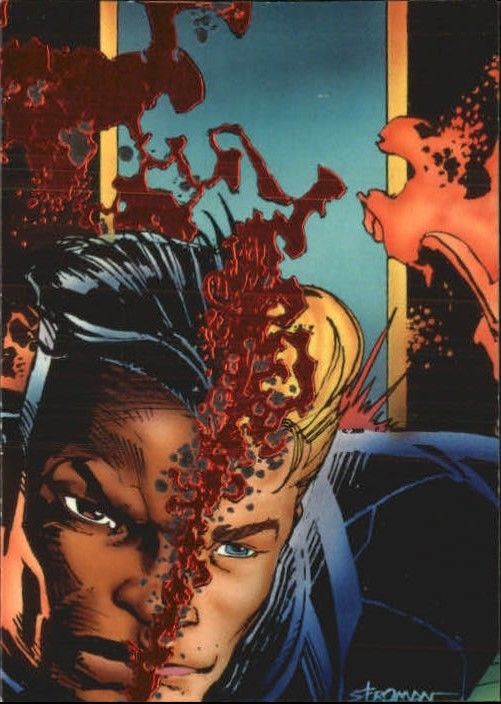
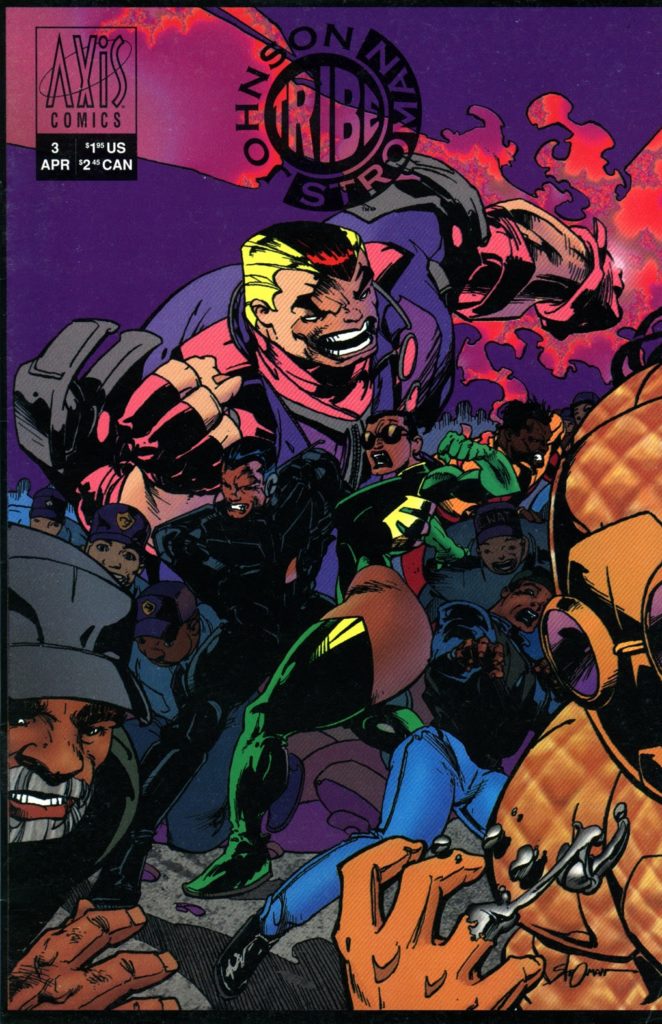
What struck many readers when they first opened TRIBE wasn’t just the subject matter — it was the look. Larry Stroman’s art was unlike anything else on the shelves in 1993. While most of Image’s breakout books were defined by glossy splash pages, hyper-muscular anatomy, and cinematic spectacle, Stroman leaned into a style that was angular, bold, and unapologetically experimental.
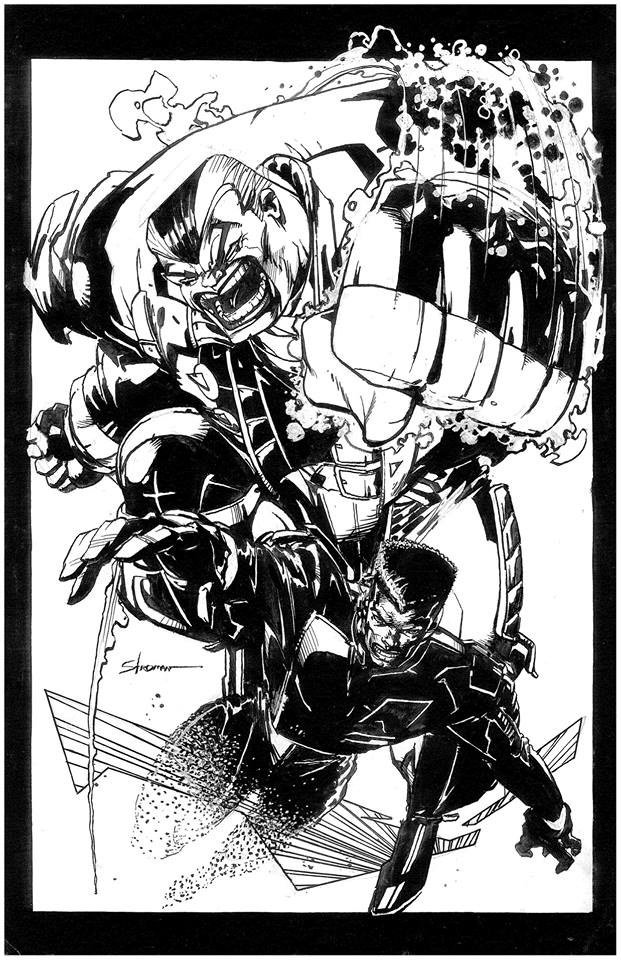
Stroman had already made his mark on X-Factor at Marvel, where his sense of design and character acting stood out. But in TRIBE, freed from corporate expectations, he went further. His figures were exaggerated, their movements dynamic, their bodies often drawn in ways that emphasized rhythm and energy rather than strict anatomical fidelity. For some readers, it may have looked “off” compared to mainstream standards — but that was the point. Stroman was breaking away from convention.
As an art historian, I see Stroman’s work in TRIBE as participating in a broader Afrocentric aesthetic tradition. The jagged lines, asymmetry, and deliberate stylization recall visual strategies used in African diasporic art — art that privileges expression over conformity, rhythm over realism. His pages often feel like jazz in visual form: riffs, improvisations, syncopated energy. In a time when superhero comics were obsessed with “perfection” of the body, Stroman’s refusal to conform was itself a radical artistic statement.
Color, too, played a crucial role. While many comics of the era leaned into neon brightness or muted grit, TRIBE embraced contrast and vibrancy. The palette underscored the Afrocentric sensibility — warm tones and rich hues that gave the book its own texture, almost pulsing with life.
From a counseling perspective, the art also communicates something deeper. The distorted, restless quality of Stroman’s figures can be read as a reflection of psychological dissonance — the tension of marginalized identities trying to assert themselves in worlds not built for them. The art refuses to sit still, just as Black creativity in the comics industry refused to be boxed in.
Where most superhero books of the era tried to “fit in” to a mainstream aesthetic, Stroman’s TRIBE was deliberately different. It looked different because it was different — a visual declaration that Black imagination would not be contained within someone else’s house style.
Narrative Themes – Identity, Power, and Community
Beyond its striking visuals, TRIBE carried a narrative pulse that made it unlike anything else in comics at the time. Stroman and Johnson weren’t just building a superhero team — they were crafting a story about identity, survival, and collective power.
At its core, TRIBE is about a group of superhumans who don’t neatly fit into the mold of the mainstream superhero team. They are outsiders, misfits, and warriors bound together not by glossy idealism but by necessity, shared struggle, and an understanding that their survival depends on unity.
Identity
Each character carried with them a sense of cultural specificity. They weren’t generic heroes painted with diverse skin tones; they had unique voices, styles, and lived experiences. This mattered deeply in 1993, when Black characters in mainstream comics were often flattened into archetypes or reduced to sidekicks. In TRIBE, identity was not an afterthought — it was the foundation.
For Black readers, this was an act of affirmation. To see characters whose appearance, rhythm, and energy reflected their own worlds was revolutionary. The team dynamic emphasized that identity is not something to be erased in the name of assimilation, but something to be embraced and celebrated as a source of strength.
Power
While many superhero comics of the era focused on power as spectacle — energy blasts, impossible muscles, city-smashing fights — TRIBE treated power as something more layered. Power was tied to culture, to legacy, to responsibility. Stroman’s art amplified this: bodies were not just vehicles for strength, but for expression, for defiance, for resilience.
From a counselor’s perspective, power in TRIBE can also be read as symbolic of agency. In a society where Black voices were often marginalized, the characters’ abilities represented the reclamation of control — over narrative, over destiny, over identity itself.
Community
Perhaps the most important theme of TRIBE is community. The title itself is telling. In a genre dominated by teams named after ideals (Justice League, Avengers, Defenders), Stroman and Johnson chose a word deeply rooted in cultural belonging. A tribe is more than a group of individuals; it is a shared identity, a collective bound by history and struggle.
This sense of community was radical in the context of early ’90s superhero comics. The X-Men, often framed as outsiders, still largely centered assimilation into a world that hated them. TRIBE rejected that. Its characters did not wait for approval from the mainstream; they found belonging in one another.
Philosophically, this speaks to a shift away from individualism toward collective empowerment. The characters’ worth was not measured by how they stood alone, but by how they stood together. In this way, TRIBE was as much a social commentary as a superhero narrative, asserting that survival and progress come through solidarity.
Psychological & Philosophical Undercurrents – Resilience & Afrofuturist Thought
While TRIBE was first and foremost a superhero comic, beneath its surface ran deep psychological and philosophical currents. Stroman and Johnson may not have been writing a textbook on identity theory, but their creative choices resonated with ideas familiar to both counseling practice and cultural philosophy.
Resilience in the Face of Trauma
As a counselor, one of the first things I notice in TRIBE is the undercurrent of resilience. The characters, much like the readers they were intended to inspire, live in a world where survival is not guaranteed. They carry scars — cultural, personal, historical — but those scars become sources of strength rather than shame.
In counseling terms, this reflects the concept of post-traumatic growth: the idea that adversity, while painful, can also catalyze new strengths, new priorities, and new connections. TRIBE refuses to present its characters as flawless superheroes detached from struggle. Instead, it affirms that resilience is born from lived experience, from enduring and overcoming.
Afrofuturist Thought
Philosophically, TRIBE participates in what we now widely call Afrofuturism — the blending of African diasporic culture with speculative imagination to reimagine futures not defined by oppression. Even if Stroman and Johnson didn’t use that label in 1993, their work stands firmly in that tradition.
By envisioning Black characters at the center of a futuristic superhero narrative, TRIBE countered centuries of cultural marginalization. It asked: What if the future is not just something Black people survive into, but something we help create, define, and lead? This question sits at the heart of Afrofuturism, and TRIBE answered with a bold, visual “yes.”
Identity and Authenticity
There’s also a philosophical assertion in how the book treats identity. Instead of assimilation, TRIBE celebrates authenticity. The characters are not asked to erase their differences in order to join a mainstream world; they are asked to embrace them, to see difference as a source of community and power.
This resonates with existential themes of authentic selfhood. Jean-Paul Sartre wrote about “bad faith” — living as others expect rather than as one’s true self. In contrast, TRIBE embodies authenticity. Its characters live unapologetically, refusing to hide who they are for the comfort of others.
The Psychology of Belonging
Finally, at its heart, TRIBE speaks to the psychological need for belonging. Abraham Maslow placed belonging near the base of human motivation, just above safety. Without it, we struggle; with it, we thrive. For readers in the ’90s, particularly Black readers, TRIBE offered a vision of belonging in a genre that often excluded them. To see a team of heroes who looked like them, sounded like them, and moved through the world with their rhythms was an affirmation of worth.
In this way, the book was more than entertainment. It was therapy in comic book form — a declaration that you belong in the future, that your community matters, and that your identity is not a weakness, but a source of power.
Cultural Impact & Legacy – TRIBE’s Place in Black Comics History
When TRIBE debuted in 1993, its impact was immediate. It sold over a million copies of its first issue, making it the best-selling comic created by Black creators at the time. For Stroman and Johnson, this was more than a commercial victory — it was proof that readers were hungry for stories outside of the narrow lanes of Marvel and DC.
Breaking Records, Breaking Barriers
In an era when diversity in comics often meant one or two “token” characters folded into a larger team, TRIBE stood apart. It wasn’t just about representation within someone else’s framework; it was about a fully realized world built from the ground up by Black creators. That act of cultural ownership was revolutionary. It said: we are not waiting for permission to tell our stories.
For many Black readers, this was the first time they saw a comic that unapologetically reflected their communities, aesthetics, and rhythms. In counseling terms, it provided mirroring — the powerful psychological experience of seeing oneself reflected authentically in art and media. This mattered then, and it still matters today.
The Short Run and Industry Challenges
And yet, despite its groundbreaking debut, TRIBE was short-lived. After its record-breaking launch at Image, the series quickly shifted to independent publishing, but distribution challenges, market instability, and the bursting of the speculative comics bubble in the mid-1990s cut its lifespan short. Only a handful of issues were released before the title faded into history.
This brevity adds a bittersweet note to its legacy. On one hand, it remains a milestone: a reminder of what’s possible when Black creators take the reins. On the other, it highlights how fragile such projects were in an industry still dominated by gatekeeping and structural inequities.
Influence and Echoes
Despite its short run, the influence of TRIBE reverberates. It paved the way for later Black-created comics and independent publishers who saw in Stroman and Johnson’s success a blueprint for asserting creative control. Today’s vibrant scene of Black independent comics — from Afrofuturist anthologies to superhero universes crafted by Black-owned companies — owes part of its lineage to TRIBE.
Artistically, Stroman’s bold style also left its mark. In a market often obsessed with conforming to “house styles,” TRIBE demonstrated the power of visual distinctiveness. Its Afrocentric aesthetic anticipated the broader cultural embrace of Afrofuturism in mainstream media, long before Black Panther (2018) made it a global phenomenon.
Legacy in Representation
Ultimately, TRIBE’s most enduring legacy is its role as a cultural landmark. It showed that Black creativity in comics could not only exist but thrive on a massive scale. It gave readers a vision of a future where Blackness was not peripheral but central — not an add-on but the foundation.
In that sense, TRIBE remains unfinished business. Its run may have been brief, but its message continues: representation matters, ownership matters, and imagination matters.
Reflections as an Educator, Counselor & Art Historian
When I return to TRIBE as an educator, counselor, philosopher, and art historian, I don’t just see a comic book. I see a cultural artifact that speaks across disciplines — to the classroom, to the therapy room, to the gallery, and to the broader conversation about identity and representation.
As an Educator
From an educational perspective, TRIBE is a teaching tool. It challenges the dominant narrative that the superhero genre is monolithic or culturally neutral. In classrooms, I can use TRIBE to show students how art and literature are always embedded in history — in this case, the history of Black creativity asserting itself in an industry reluctant to make space for it.
For young readers, especially students of color, TRIBE is also an affirmation. It says: your voice, your rhythm, your aesthetics belong in the canon. That message is as crucial now as it was in 1993.

As a Counselor
As a counselor, I read TRIBE through the lens of resilience and identity. Representation in media is not a superficial matter — it’s psychological nourishment. When people see themselves reflected authentically, they feel validated; when they are erased or distorted, they internalize exclusion. TRIBE provided readers with a vision of belonging, community, and empowerment.
The book also offers a subtle therapeutic lesson: that strength is not the absence of struggle, but the transformation of it. Each character carries a uniqueness that sets them apart, but within the community of the tribe, difference becomes power. That’s a framework I bring to counseling work every day.
As a Philosopher
Philosophically, I see TRIBE as a meditation on authenticity. Its characters refuse assimilation. They are not superheroes trying to fit into someone else’s mold; they are a community defining themselves on their own terms. In existential thought, this is the difference between “bad faith” (living as others expect you to) and authenticity (living true to your essence). TRIBE models authenticity in a genre that often pressures difference into conformity.
As an Art Historian
As an art historian, Stroman’s style fascinates me. His visual language — angular, rhythmic, improvisational — connects to broader Afrocentric and diasporic art traditions. TRIBE does not just tell a story; it looks like its story. Its form and content are inseparable, a reminder that representation is not just about who appears in a narrative, but how that narrative is told.
In this way, TRIBE sits alongside other movements in visual culture that insisted on aesthetic independence: jazz as a musical form, street art as urban storytelling, Afrofuturism as speculative tradition. Stroman’s art doesn’t imitate the mainstream — it insists on its own rhythm.
TRIBE’s Lessons for Today’s Readers
Looking back at TRIBE three decades after its debut, I see more than a comic book with a record-breaking first issue. I see a blueprint. Stroman and Johnson may not have had the longevity of Marvel or DC behind them, but what they created was bold, distinctive, and unforgettable. They showed that Black creators could tell stories on their own terms, in their own voices, and still capture the imagination of a wide audience.
For today’s readers, TRIBE carries several lessons. First, it reminds us that representation is not optional — it is essential. Seeing oneself authentically reflected in art is not just a matter of diversity statistics; it is a matter of belonging, identity, and psychological well-being. TRIBE offered that reflection long before “representation” became a buzzword in the industry.
Second, it underscores the importance of creative independence. Stroman’s art didn’t conform to mainstream expectations — and that refusal to assimilate gave TRIBE its power. In a time when cultural expression is often commodified, TRIBE challenges us to ask: what does it mean to create authentically, without apology?
Finally, TRIBE leaves us with the reminder that community is at the heart of survival and progress. The book’s title was no accident. It affirmed that power comes not from erasing difference, but from uniting through it. That message resonates not only in superhero narratives but in real-world struggles for equity and justice.
As an educator, counselor, philosopher, and art historian, I find myself returning to TRIBE because it refuses to fade into obscurity. Its run may have been brief, but its impact endures. It stands as both inspiration and unfinished business — a glimpse of what’s possible when marginalized voices claim their space in the cultural imagination.
And perhaps that’s the greatest lesson of all: TRIBE proves that the future of storytelling belongs to those bold enough to imagine it differently.