
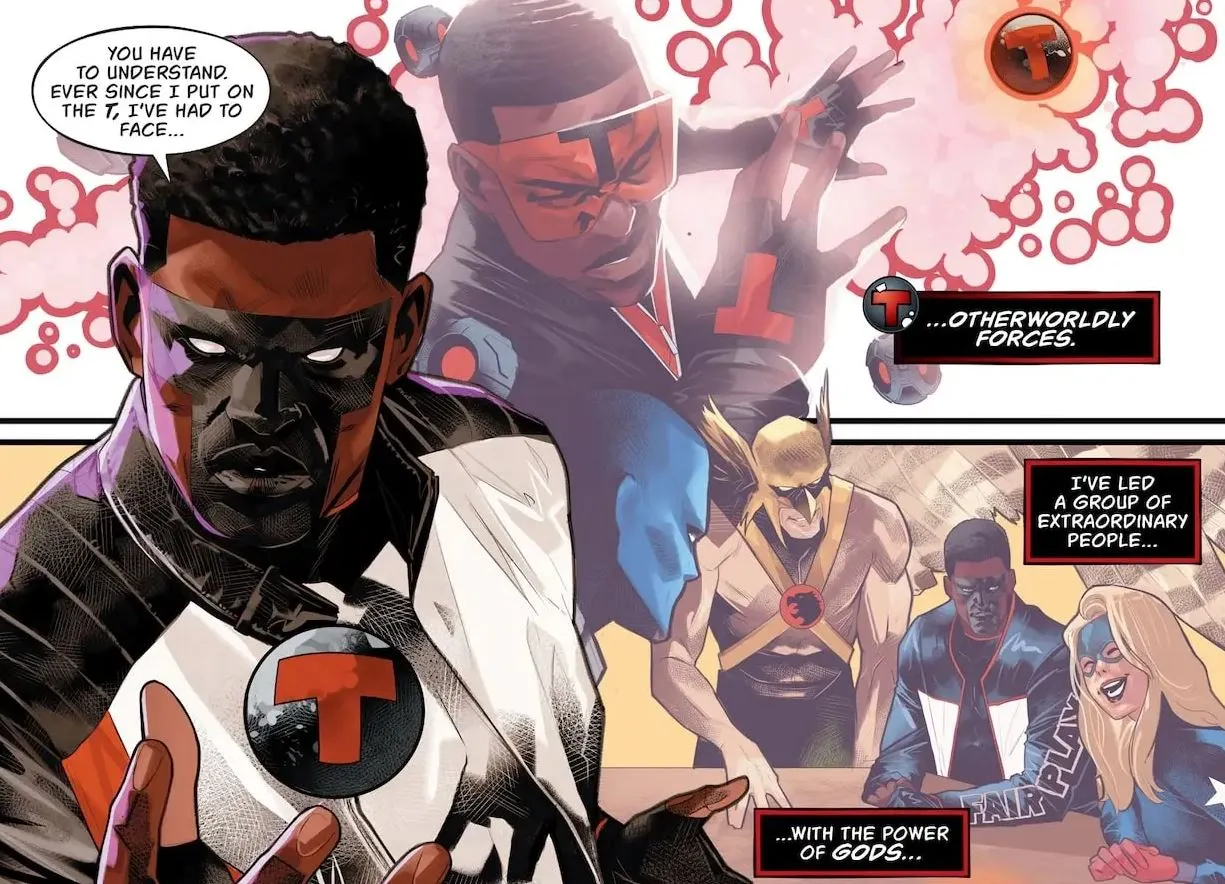
Let’s face it—Michael Holt doesn’t get enough credit.
In a DC landscape dominated by Batmen, Kryptonians, and speedsters, Mr. Terrific has often been relegated to the background: brilliant, stoic, capable… and unfortunately underwritten. But with Mr. Terrific: Year One #1, writer Al Letson, artists Edwin Galmon and Valentine De Landro, and colorist Marissa Louise, bring Holt back into focus—and this time, it’s personal.
This isn’t just a superhero origin tale. It’s a slow burn about loss, trauma, and the hard, messy road to healing when your mind works faster than your heart can keep up.
The Smartest Man in the Room—Emotionally Overdrawn
From the very first page, this issue lets you know: this is not going to be just gadgets, quips, and science flexing. We open with the devastating loss of Michael Holt’s wife, Paula, and their unborn child. It’s an emotional gut punch, made all the more painful because Holt isn’t a man who screams or smashes things. He compartmentalizes. He spirals. He self-isolates in spreadsheets, gym routines, and quantum equations.
Letson’s writing shows a deep empathy for Holt’s emotional terrain. His dialogue is precise yet reflective, often quiet but heavy with meaning. Holt doesn’t monologue—he grieves, and he does it the only way he knows how: by trying to outthink the pain.
And that’s what makes this issue work. Holt’s journey is deeply internal. His “Fair Play” mantra isn’t just a slogan—it’s his desperate grasp at justice in a world that gave him none.
A Dual Artistic Lens: Galmon and De Landro
The dual artwork by Edwin Galmon and Valentine De Landro delivers two aesthetic punches—sometimes gritty and sometimes contemplative, always intentional.
Galmon’s clean lines and grounded realism perfectly capture the raw, human emotion in Holt’s private moments. Meanwhile, De Landro injects grit and texture into the broader world Holt navigates, making the surrounding environment feel just as oppressive and emotionally charged as his inner world.
Marissa Louise’s colors tie it all together. The palette moves between cool, mournful hues and sudden sparks of energy—signaling emotional transitions without disrupting the tone. When Paula appears in flashbacks or as a projection, the warmth in the colors becomes almost nostalgic, even sacred. Louise and the artists ensure Holt’s world feels heavy but alive.
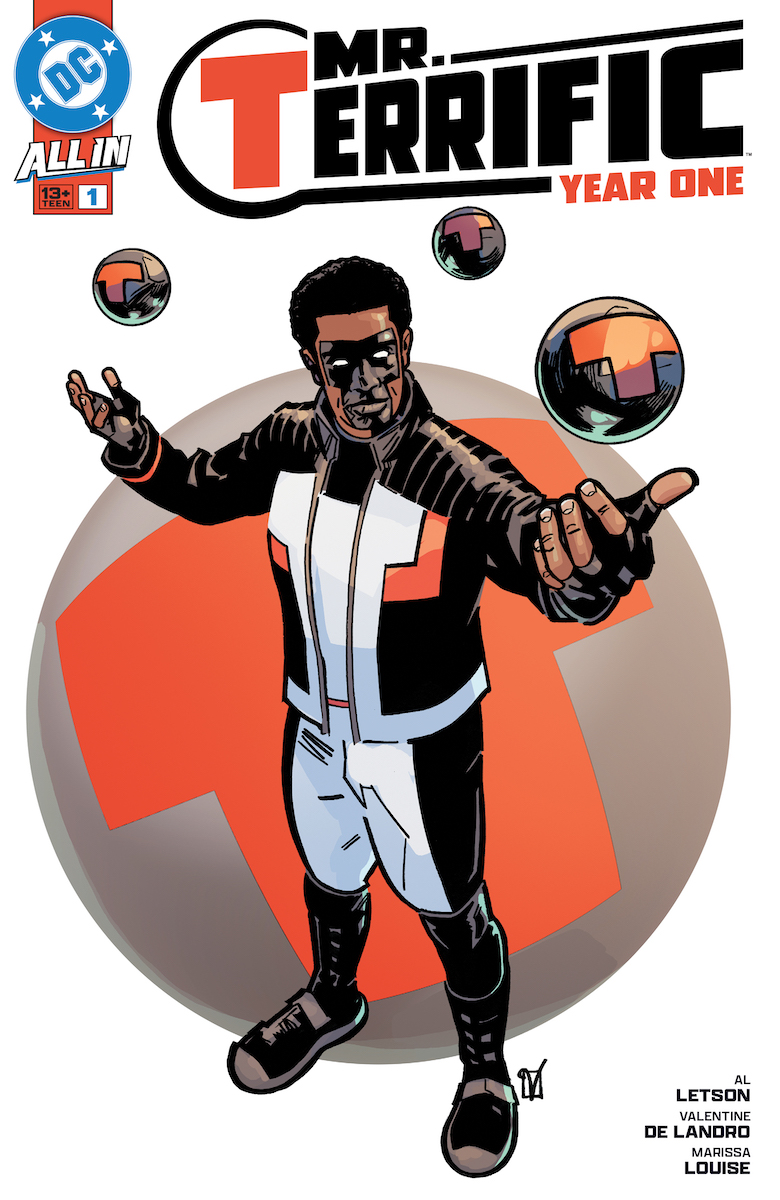
Even the cover, created by Marissa Louise and Valentine De Landro, offers a tone-perfect prelude: haunting, heroic, and solemn all at once.
Representation That Doesn’t Preach—It Lives
Let’s talk about the big one: Black representation.
This book doesn’t check boxes. It breathes representation.
Holt isn’t forced to prove his genius—he lives it. His grief is valid, not minimized. His trauma isn’t portrayed as weakness—it’s framed as humanity. He’s a Black man who is allowed to be soft, brilliant, broken, and slowly rebuilt.
Letson doesn’t write Holt as a “Black version of Batman.” He writes him as someone who exists at the intersection of extraordinary intellect and emotional fragility, with cultural resonance that goes beyond tokenism. This isn’t “diversity for diversity’s sake.” This is honest, grounded storytelling.
Memory, Trauma, and Time Loops
This isn’t just a rehash of origin tropes. Letson’s narrative structure is bold—nonlinear and layered. The story drifts between Holt’s childhood, his early love, and his present-day despair. It makes the issue feel like you’re reading from inside Holt’s head: disjointed, looping, searching.
But this never becomes confusing. In fact, it makes the narrative more compelling. It’s less “How did Mr. Terrific get his T-spheres?” and more “What made Holt need them?”
There’s a moment where Holt has a conversation with a hologram of Paula—constructed by his own technology. It’s disturbing and tender. This is a man trying to reverse the irreversible, not just with science, but with grief-fueled obsession.
A Slower Burn—But A Richer Flame
If you’re looking for costumes and capes in your first few pages, you’ll be waiting. This issue is mostly quiet—internal monologues, flashbacks, and silent grief.
And that’s what makes it a standout.
This is an origin story told after the loss, not before the costume. Holt doesn’t need to be bitten by a radioactive anything. His call to action is a hospital hallway, a funeral, a cold bed. It’s real.
Final Verdict: Mr. Terrific, Finally Given His Due
With Mr. Terrific: Year One #1, Letson, Galmon, De Landro, and Louise have crafted a powerful opening chapter in what promises to be one of the most emotionally intelligent books of the year.
It’s not just a win for Black superhero narratives. It’s a win for superhero literature.
Rating: ⭐️⭐️⭐️⭐️½ (4.5 out of 5 stars)
Smart, soulful, and beautifully drawn—this is Mr. Terrific like you’ve never seen him before.
What did you think of Holt’s quiet strength in this issue? Have you been waiting for a deeper dive into Mr. Terrific’s story? Sound off in the comments or hit us up on socials. And stay locked into WorldofBlackHeroes.com for more on the rise of Black-led comics in the mainstream.