Patriotism in a Broken Mirror
Independence Day in the United States often conjures images of fireworks, flags, and military heroism. Yet for many African Americans, especially those with a historical memory, July 4th is a reminder of paradox. How does one celebrate a country that proclaimed liberty while sanctioning slavery? How do we salute a flag under which so many were lynched after serving?
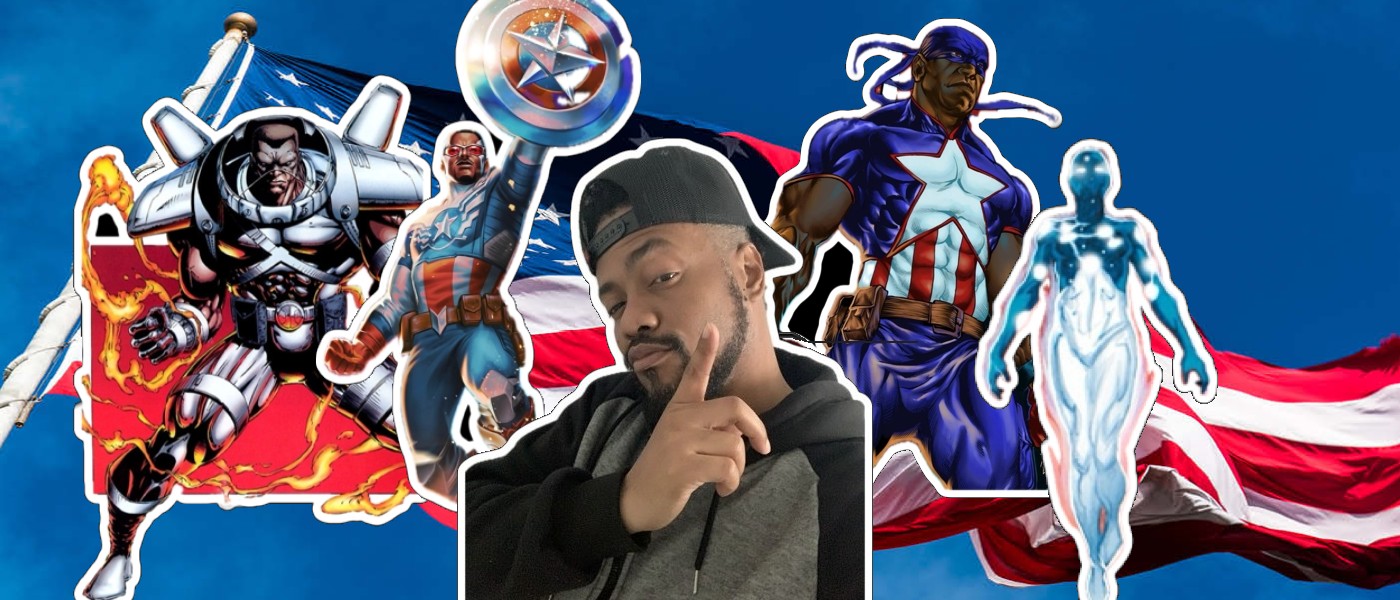
This tension is powerfully embodied in the portrayals of Black superheroes labeled as “patriots”—those who wear the red, white, and blue not just on their suits but in their ethos. Characters like Isaiah Bradley, Elijah Bradley (Patriot), Captain Universe, and Battalion offer more than entertainment; they are a lens into the complex and often painful relationship between Black Americans and national service (Fraser, 2019). Their stories parallel the real-world experiences of Black soldiers who, for centuries, fought for a country that refused to fight for them.
Historical Reality: Black Soldiers and the Price of Loyalty
The paradox of Black patriotism is most viscerally understood through the lived experiences of African American soldiers. From the Revolutionary War to Iraq and Afghanistan, Black men and women have consistently answered the call to serve—even when their country denied them full citizenship, civil rights, or basic human dignity. Their service, often exploited and unrecognized, provides a historical backdrop that parallels the fictionalized experiences of patriotic Black superheroes.
Revolutionary War to Civil War: Loyalty Amid Enslavement
Even during the founding of the United States, enslaved Africans and free Black men fought for a freedom they did not possess. Promises of manumission led many to enlist. Crispus Attucks, often cited as the first martyr of the American Revolution, symbolizes this contradiction: the first to die for American independence was himself a fugitive from slavery.
During the Civil War, over 180,000 Black men served in the Union Army, organized into segregated units such as the famed 54th Massachusetts Regiment. Despite their valor, they were initially paid less than white soldiers, denied promotions, and often assigned to labor or frontline suicide missions (McPherson, 1997). The story of Sergeant William Carney, the first African American to receive the Medal of Honor, is instructive: even acts of undeniable bravery were often met with silence and bureaucratic delay.
World War I: Courage Without Citizenship
In World War I, Black Americans joined the fight with the hope that valor on the battlefield would translate into justice at home. Nearly 370,000 Black soldiers served, but most were consigned to support roles. The Harlem Hellfighters (369th Infantry Regiment) distinguished themselves in combat under French command, having been rejected by white American units. They spent more time in frontline trenches than any other U.S. regiment, earning high praise and military honors—yet returned to a segregated America that refused to fully acknowledge their contributions (Barbeau & Henri, 1974).
After the war, instead of being rewarded as heroes, many Black veterans were targeted in what came to be known as Red Summer (1919)—a series of brutal white supremacist attacks across the U.S., triggered by white anxieties about Black autonomy and military service. Black veterans were seen as “uppity” and dangerous for having borne arms in defense of freedom abroad and demanding it at home (Kirschner, 2012).
World War II: Service and Segregation
World War II revealed even deeper contradictions. The military remained fully segregated, and Black soldiers were often relegated to service or labor units. Despite this, over one million African Americans served. The Tuskegee Airmen, the first Black military aviators in the U.S. Army Air Corps, broke barriers and demonstrated excellence in the skies. Their success became a powerful rebuttal to racist ideologies of inferiority, both in the military and civilian spheres.
Yet, when these soldiers returned home, they were met not with parades but with discrimination. Many were denied GI Bill benefits due to local-level racial gatekeeping, particularly in housing and education. As Katznelson (2005) outlines in When Affirmative Action Was White, white veterans were able to accumulate generational wealth through homeownership and university education, while Black veterans were shut out, exacerbating systemic inequality for decades.
A particularly horrific example of betrayal is the case of Isaac Woodard Jr., a decorated veteran who, just hours after his honorable discharge in 1946, was beaten and blinded by police in South Carolina. Woodard’s case received national attention and even moved President Truman to take steps toward desegregating the military (Wynn, 2010).
Vietnam to Iraq: Betrayal and Dissent
During the Vietnam War, Black soldiers were overrepresented in combat roles and casualties. Many enlisted out of economic necessity or were disproportionately drafted through racially biased systems (Westheider, 1997). At home, the civil rights and antiwar movements intersected, with figures like Muhammad Ali refusing the draft, famously stating, “No Vietcong ever called me n****.”* The statement captured the moral dissonance of being asked to kill for a country that still upheld racial apartheid.
Even in recent wars like Iraq and Afghanistan, Black service members continue to confront structural racism within the military, from disproportionate rates of court-martial to underrepresentation in leadership positions (Leland, 2021). Their experiences echo those of their historical predecessors, showing that the contradiction between loyalty and neglect remains unresolved.
The Legacy of Service Without Reward
This persistent pattern of “service without reward” or “loyalty without recognition” forms the moral spine of Black patriotic superheroes like Isaiah Bradley, Patriot, and Battalion. These characters do not just wear the flag—they carry its heaviest contradictions. Their stories are not merely metaphorical; they are rooted in historical truths that continue to echo in the experiences of Black veterans, military families, and broader Black communities.
In counseling settings, these legacies often surface as intergenerational trauma, feelings of betrayal, or conflicted national identity. The trauma is not only psychological but spiritual—a sense that one has been asked to serve, kill, or sacrifice for a nation that cannot even acknowledge your humanity.
Superheroes as Mirrors: Comic Book Patriotism and Racial Memory
Against this backdrop, the emergence of Black superheroes dressed in patriotic symbolism becomes a rich site of contradiction and critique.
Isaiah Bradley: The Forgotten Captain America
Superheroes have long functioned as mythic symbols—idealized representations of courage, morality, and identity. But for Black characters clad in stars, stripes, or military colors, the meaning of patriotism is far more complex. These superheroes become narrative mirrors: not of the American dream, but of the Black American experience—fragmented, heroic, betrayed, and yet enduring.
As seen in characters like Isaiah Bradley, Elijah Bradley (Patriot), Captain Universe (Tamara Devoux), Battalion, and Captain America variants like Josiah X, the act of donning patriotic symbols becomes an act of tension, not just tribute. These characters are not simply role models; they are reflections of centuries of struggle, valor, and unrequited sacrifice.
Isaiah Bradley: The Super-Soldier Built on Injustice
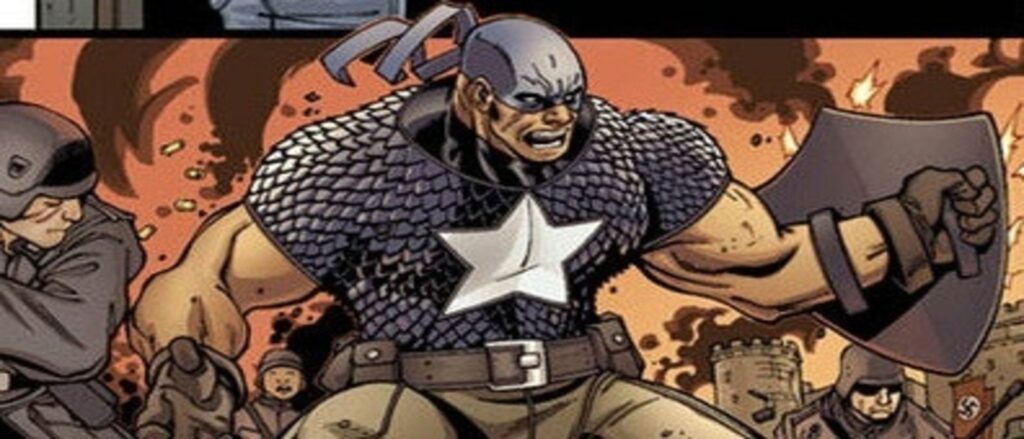
Perhaps no character embodies the racial paradox of American heroism more than Isaiah Bradley, the first Black Captain America from Marvel’s Truth: Red, White & Black (Morales & Baker, 2003). Created through unethical experiments on Black soldiers—a direct allusion to the Tuskegee Syphilis Study—Bradley’s story explicitly critiques the historical exploitation of Black bodies for national gain.
Isaiah’s silence and obscurity in the Marvel Universe mirrors the fate of real-life Black war heroes whose sacrifices were erased from textbooks and monuments. That he survives, mentally and physically scarred, becomes a metaphor for resilient Black masculinity—heroic not because of power alone, but because of survival through betrayal.
Bradley’s presence also speaks to intergenerational trauma. His legacy is passed down to his grandson, Elijah Bradley, who becomes Patriot in Young Avengers. Elijah’s heroism is not only a tribute to his grandfather’s sacrifice, but also a political act: he chooses to serve a country that still questions his worth. This theme of inherited wounds and chosen resistance mirrors the lived experience of many African American families with military histories marked by both pride and pain.
Patriot (Elijah Bradley): Bearing the Burden of a Nation
Elijah Bradley, as Patriot, represents the generational tension between reverence for service and disillusionment with the state. Unlike Steve Rogers, whose patriotism was unambiguous, Elijah’s is ambivalent but resilient. His role as a young, Black superhero working alongside legacy figures in the Marvel Universe speaks volumes about what it means to inherit a broken dream—and try to mend it.
In therapeutic terms, Elijah embodies adaptive identity negotiation—the psychological process by which marginalized individuals find ways to belong without losing themselves (Cross & Vandiver, 2001). His character raises critical questions: Can you love a nation that never loved you back? Can you still be a hero if you question your country’s ideals?
Captain Universe (Tamara Devoux): Power Without Nationalism
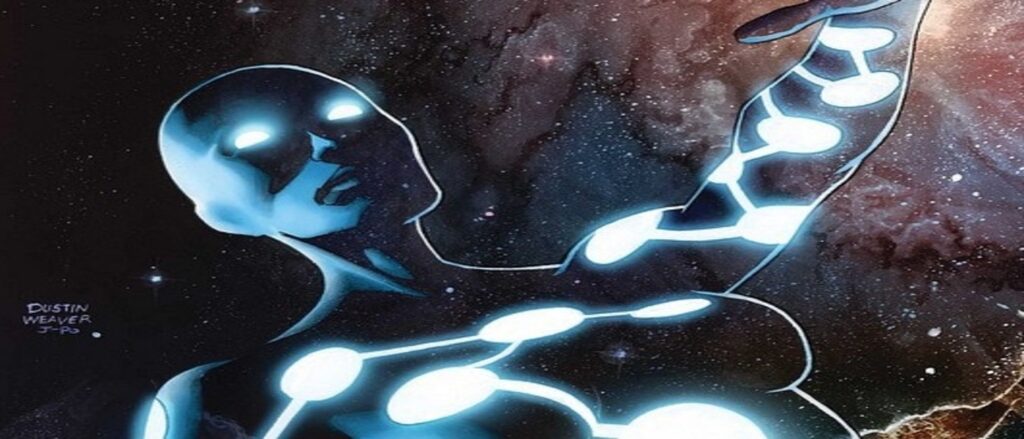
In contrast to the red-white-and-blue archetype, Tamara Devoux, who briefly becomes Captain Universe, offers a cosmic interpretation of patriotism. Her transformation elevates her beyond nationalism. Yet, her grounding as a Black woman in a trauma-induced coma who regains her agency through cosmic power is deeply symbolic.
Her story reflects how Black women, often sidelined in both history and heroism, must undergo extraordinary transformations to be heard. While not wrapped in a literal flag, Tamara’s connection to cosmic justice parallels the moral demands often placed on Black women in real life—to rise above, to carry collective burdens, to heal without being healed.
Battalion (Jackson King): Leading While Black
Jackson King, aka Battalion, from WildStorm’s Stormwatch, is a Black superhero who leads a global peacekeeping task force. Unlike the Bradleys, his heroism is institutional—he operates within global systems of power and command. Yet even here, race complicates his leadership.
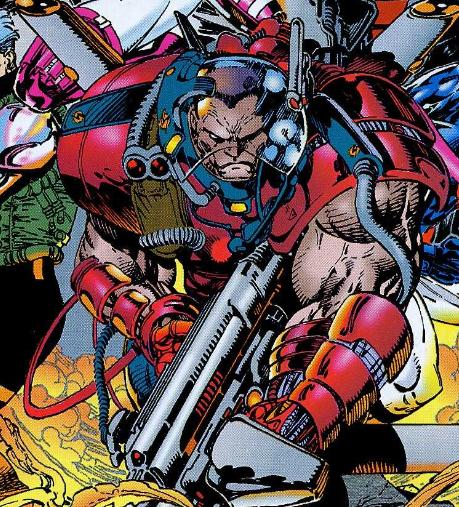
Battalion must constantly prove his competency, navigate suspicion, and hold together fractured alliances. His narrative reflects the real-world struggles of Black officers in the U.S. military who are promoted but not trusted, visible but unsupported (Leland, 2021). His presence in a multinational peace force brings racial dynamics to the forefront: even in imagined egalitarian futures, racial hierarchies persist.
Shadow Patriots and Forgotten Fighters
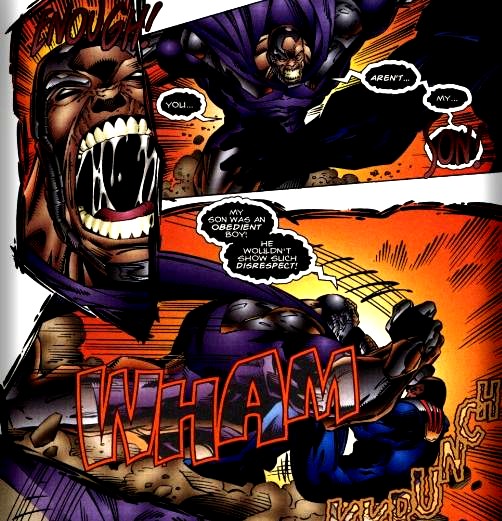
In addition to the more prominent patriotic figures, characters like Josiah X—a Muslim Black man who inherits the Captain America serum—and Despot, a militarized tyrant, offer contrasting takes. Josiah X embodies redemptive nationalism—the belief that faith, integrity, and legacy can reshape a toxic national past. Despot, in contrast, is the shadow: a representation of the militarized Black man consumed by bitterness and the thirst for control, a cautionary tale about the dangers of unprocessed trauma.
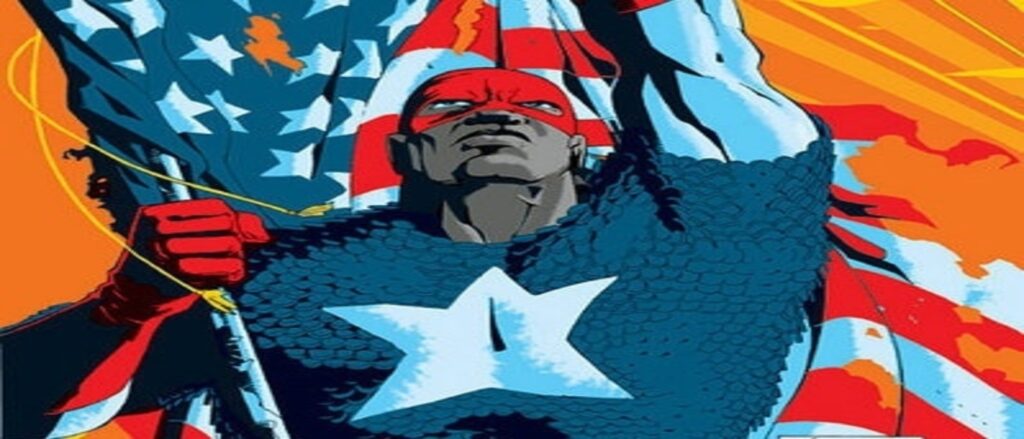
This duality is crucial. Black superheroes in patriotic roles are not monolithic. They are aspirational, ambivalent, and sometimes antagonistic. They reflect the variety of responses Black Americans have had to a nation that is often at odds with its own ideals.
From Comics to Counseling: Superheroes as Emotional Catalysts
These characters are not just tools for entertainment. In therapy and education, they become symbolic bridges. Veterans, youth from military families, or those grappling with identity issues often find solace and insight through these fictional figures. They validate emotional truths: that anger, confusion, and even love for one’s country can coexist.
Counseling literature supports the use of bibliotherapy and symbolic modeling to help clients explore identity conflicts (Pardeck, 1994). When a client identifies with Patriot or Isaiah Bradley, it opens a channel to process real wounds—military, familial, racial—that may otherwise remain buried.
Think About It
Black patriotic superheroes don’t offer easy answers. Instead, they hold up a mirror—sometimes cracked, sometimes foggy—to the nation’s own reflection. They ask uncomfortable questions: Who gets to be called a hero? What does service mean when you’re seen as expendable? Can loyalty exist without justice?
In asking these questions, they honor not just the fictional universes they inhabit—but the real soldiers, families, and communities whose stories are still being written.
The Struggle for Recognition: The Philosophy of Double Consciousness and the Quest to Belong
Recognition is not just a social reward—it is a fundamental human need. For Black Americans, particularly those who have served in the military or fought for justice in any form, the struggle for recognition is an existential dilemma: Can one ever truly be seen by a country that was built to look past them?
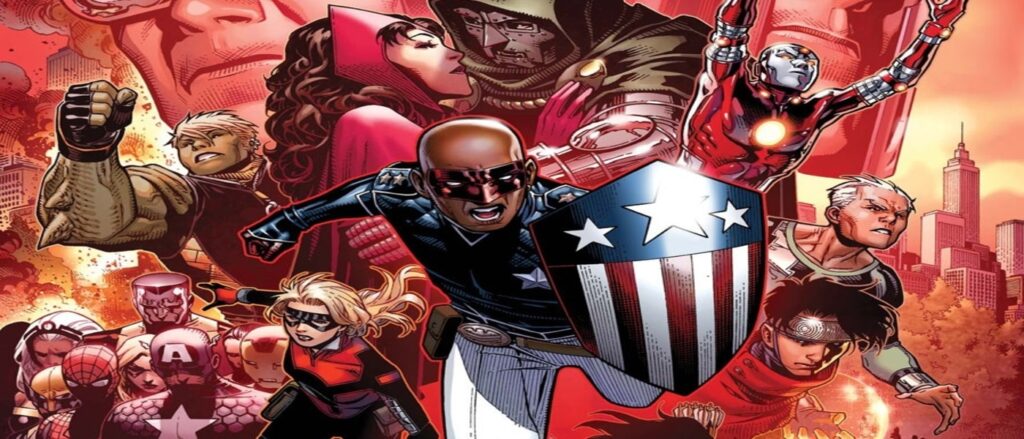
In the realm of superhero narratives, Black characters often embody this tension through their quest to serve and protect a society that questions their legitimacy. Their fictional struggles mirror real-life experiences of African Americans who have historically fought for a nation that either denied them credit, erased their heroism, or repaid their service with suspicion or violence.
Du Bois and Double Consciousness in the Superhero Frame
W.E.B. Du Bois (1903) famously described double consciousness as “this sense of always looking at one’s self through the eyes of others…two souls, two thoughts, two unreconciled strivings.” This philosophical lens remains one of the most poignant frameworks for analyzing Black superheroes in patriotic roles.
Take, for example, Elijah Bradley (Patriot), a young Black superhero trying to uphold a legacy rooted in both pain and pride. Elijah doesn’t wear the flag out of naïveté—he wears it to reclaim it. Yet even as he saves lives, he’s often treated as suspect, unstable, or untrustworthy. This mirrors real-world experiences of Black soldiers who, even after risking their lives, returned to racial segregation, economic exclusion, and police violence.
Similarly, Battalion (Jackson King) serves as the leader of a global super-team, commanding immense power and respect within his organization. But his race—and the latent biases of his peers—frequently undercut his authority. The need to constantly prove himself echoes what many Black professionals, soldiers, and public servants experience in real life: being told they’re exceptional while simultaneously being treated as replaceable.
Recognition Denied: A Psychological and Social Injury
Recognition is more than praise—it’s about being seen, heard, and validated as fully human. When denied, the psychological impact can be immense. In counseling, this often presents as internalized self-doubt, imposter syndrome, hypervigilance, or even deep resentment toward institutions. Black clients may express a form of “patriotic disillusionment”—a cognitive and emotional split between love for one’s country and heartbreak over its betrayals (Harrell, 2000).
Characters like Isaiah Bradley become symbolic of this wound. After being subjected to unethical super-soldier experiments, he is erased from history books while Captain America becomes a legend. Bradley’s isolation—confined to a hospital and silenced for decades—is a direct metaphor for the historical gaslighting of Black excellence and contribution.
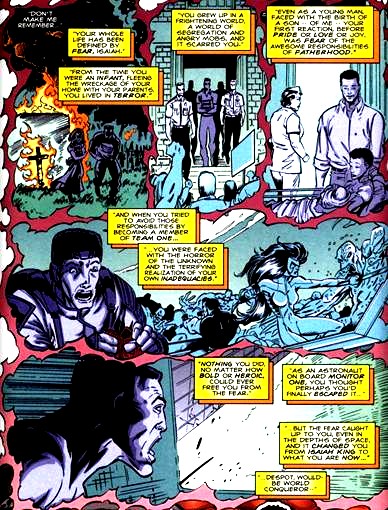
The failure to publicly recognize the Tuskegee Airmen, the 761st Tank Battalion, or the Montford Point Marines until decades later is more than an administrative delay—it is a systemic moral injury. Superhero stories that depict this erasure (intentionally or metaphorically) shine a light on how damaging it is to serve a system that selectively forgets its own heroes.
Resistance as Recognition: Reclaiming Narrative Power
In contrast, superheroes like Josiah X, Tamara Devoux (Captain Universe), and Stormwatch’s Battalion resist erasure by embodying transformative patriotism. They fight not to be accepted by the dominant power, but to redefine what national belonging means.
This resistance itself becomes a demand for recognition—not just of individual merit, but of Black humanity, leadership, and vision. They refuse to ask for validation and instead make space for themselves in the national mythology.
In doing so, they echo real-life figures like Charles Hamilton Houston, Fannie Lou Hamer, or even Colin Powell—individuals who navigated elite systems while pushing back against their structural exclusions. Their superhero counterparts embody this spirit: recognition not as reward, but as reclamation.
Recognition in Counseling: Helping Clients Name and Heal the Gap
In therapeutic work, the struggle for recognition often surfaces in clients’ narratives of being overlooked, underestimated, or marginalized in family, school, or work contexts. For African American veterans or professionals, it may manifest as survivor’s guilt, moral injury, or role fatigue—especially when they’ve been idealized and overburdened by expectations, only to be left unsupported when most needed.
As a counselor, I find that superhero narratives like Isaiah’s or Elijah’s can help clients process these feelings by externalizing the trauma. Talking about Patriot being treated as a threat despite his loyalty helps a young Black man discuss his own school suspensions or law enforcement encounters. Examining how Josiah X questions American ideals allows a veteran to explore his sense of betrayal without initially diving into deeply personal memories.
This method, known as symbolic or narrative reframing, gives space for processing anger and grief through metaphor. Over time, it opens the door for healing, self-recognition, and empowerment.
Recognition as Liberation
Ultimately, the struggle for recognition is about more than ego—it’s about freedom. To be recognized is to be affirmed as part of the collective story, not a footnote or aberration. For Black superheroes, especially those tied to national symbols, this struggle reflects a deeper existential question: Can America ever see Blackness as central to its identity rather than peripheral?
By existing, resisting, and leading, these characters answer: We already are.
Symbolism vs. Substance: Wearing the Flag, Fighting the State
Many Black superheroes who adopt patriotic imagery do so with ambivalence. They are symbols of a freedom they rarely experience. Captain Universe (Tamara Devoux), a powerful Black woman granted cosmic awareness, temporarily embodies the American ideal—but her battles are not nationalistic. Her story critiques the idea that power must be linked to imperialism or conquest.
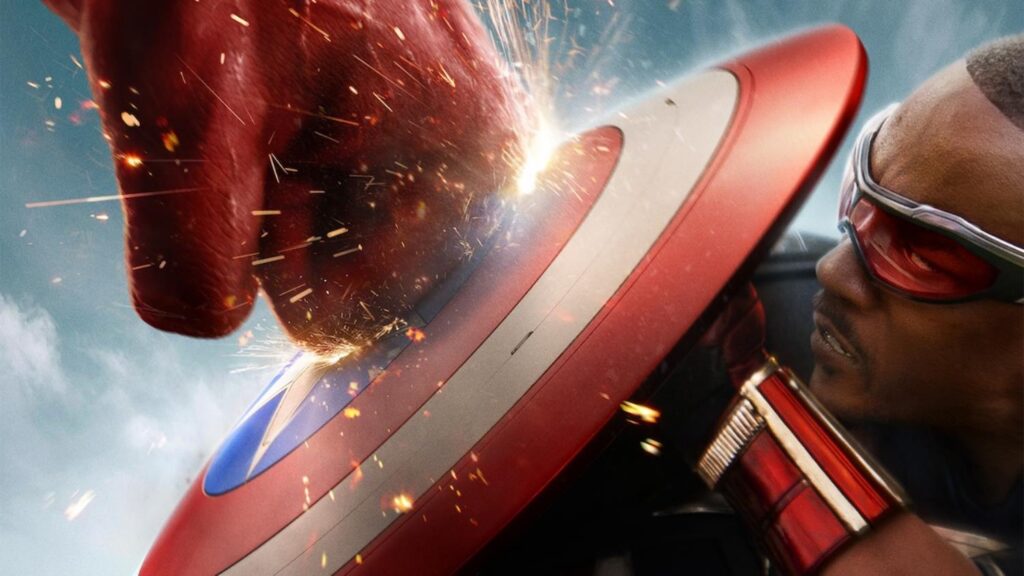
Even more provocatively, characters like Despot, who misuse patriotic symbolism, mirror historical anxieties about state-sanctioned power without accountability. These villains complicate our understanding of what it means to “serve.” They echo what Frantz Fanon (1963) warned against: the colonized individual who internalizes the values of the oppressor.
Patriotism and Betrayal: Counseling Insights
From a counseling perspective, these superhero narratives hold real psychological weight. Many clients—especially Black veterans or those from military families—express profound identity fragmentation when their loyalty is not reciprocated.
In therapeutic sessions, characters like Isaiah or Patriot can become metaphorical entry points to unpack themes of betrayal, generational trauma, and conflicted loyalty. These are not just fictional dilemmas—they reflect real moral injuries, a term used in psychology to describe the distress caused by betrayal of one’s ethical beliefs by authority (Litz et al., 2009).
Young people, particularly Black youth, also internalize conflicting messages about their place in national narratives. Superhero media that acknowledges these tensions—rather than erasing them—can aid in fostering critical consciousness and resilience (Freire, 1970).
Why These Heroes Matter—Especially on the Fourth of July
Independence Day is often framed as a celebration of national unity. But the presence of these Black superheroes asks a deeper question: Who gets to be called a patriot?
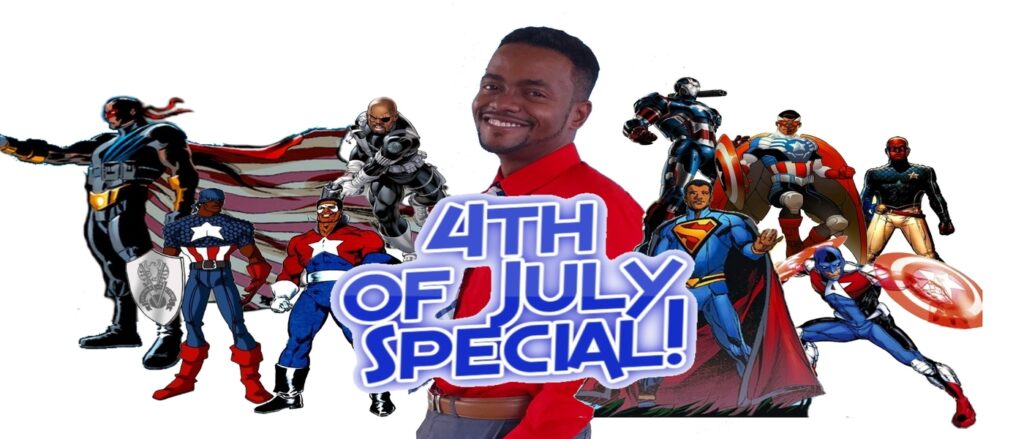
By centering characters like Isaiah Bradley and Elijah, the “Meet the Patriots” article reminds us that patriotism is not performative—it’s relational. It is not about waving a flag, but about demanding that the nation live up to its stated ideals. These characters do not seek to destroy America. They seek to heal it, hold it accountable, and make it honest.
Legacy and Liberation
The portrayal of Black patriotic superheroes is not just about visibility—it’s about vindication. It’s about reclaiming narratives, restoring erased heroism, and interrogating what patriotism should mean in a nation still grappling with its racial sins.
Their stories honor not only fictional battles, but real sacrifices—from Crispus Attucks to the Harlem Hellfighters, from Isaac Woodard to the Tuskegee Airmen. These heroes echo every Black soldier who served a nation that often returned silence for service.
So this Fourth of July, let us salute not only fireworks and freedom—but also the truth-tellers, resisters, and healers in capes and in uniform who remind us that the truest patriots are those who fight, not just for a country—but for its soul.
References
Barbeau, A., & Henri, F. (1974). The Unknown Soldiers: Black American Troops in World War I. Temple University Press.
Du Bois, W. E. B. (1903). The Souls of Black Folk. A.C. McClurg & Co.
Fanon, F. (1963). The Wretched of the Earth (R. Philcox, Trans.). Grove Press.
Fraser, R. (2019, July 4). Meet the Patriots! 4th of July Special. World of Black Heroes. https://worldofblackheroes.com/2019/07/04/meet-the-patriots-4th-of-july-special/
Freire, P. (1970). Pedagogy of the Oppressed. Herder and Herder.
Katznelson, I. (2005). When Affirmative Action Was White: An Untold History of Racial Inequality in Twentieth-Century America. W. W. Norton & Company.
Kirschner, D. (2012). Remembering Red Summer: African American Veterans and the Struggle for Democracy in 1919. Journal of American History, 99(1), 48–55.
Leland, J. (2021). Military leaders confront history of racism in the ranks. The New York Times. https://www.nytimes.com/2021/02/22/us/military-racism.html
Leland, J. (2021). Military leaders confront history of racism in the ranks. The New York Times. https://www.nytimes.com/2021/02/22/us/military-racism.html
Litz, B. T., Stein, N., Delaney, E., Lebowitz, L., Nash, W., Silva, C., & Maguen, S. (2009). Moral injury and moral repair in war veterans: A preliminary model and intervention strategy. Clinical Psychology Review, 29(8), 695–706.
McPherson, J. M. (1997). For Cause and Comrades: Why Men Fought in the Civil War. Oxford University Press.
Westheider, J. E. (1997). Fighting on Two Fronts: African Americans and the Vietnam War. NYU Press.
Wynn, N. A. (2010). The African American Experience During World War II. Rowman & Littlefield.