A New Kind of Freedom Fighter
Juneteenth, observed each year on June 19th, commemorates the moment in 1865 when enslaved African Americans in Texas were finally informed of their emancipation—over two years after the Emancipation Proclamation. While a historical marker, Juneteenth is also a celebration of resilience, creativity, and liberation in all forms.
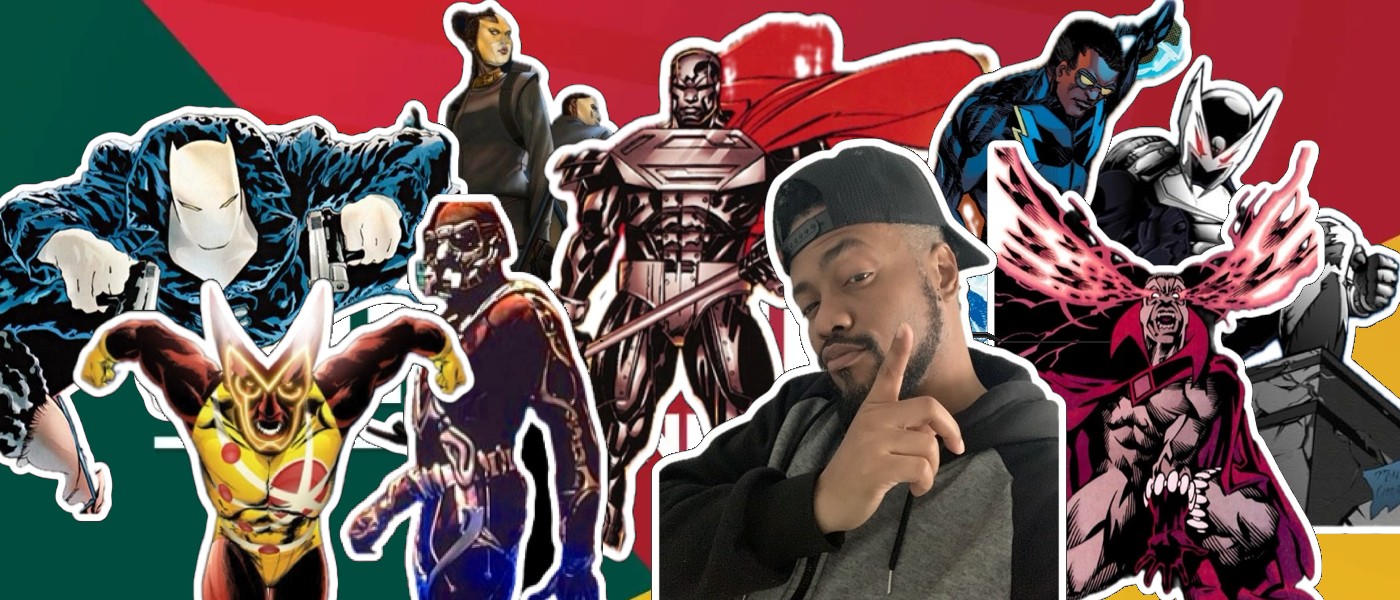
One compelling way to engage with Juneteenth is through honoring African-American superheroes—figures who embody the themes of resistance, legacy, and hope. These heroes—such as Misty Knight, Firestorm (Jason Rusch), Spawn, Ajala, and Shadowman—represent more than entertainment; they are cultural symbols that reflect and extend the legacy of Black freedom into the realm of imagination, futurism, and justice (Fraser, 2019).
Historical Context: From Emancipation to Representation
The superhero genre has long reflected social tensions and cultural aspirations. For much of the 20th century, African-American characters were either absent from comics or reduced to sidekicks and stereotypes. As Adilifu Nama (2011) noted, the emergence of Black superheroes functioned as a direct challenge to the racial invisibility that permeated American media and consciousness.
This is deeply relevant to Juneteenth, which also represents a delayed—but inevitable—recognition of Black humanity and agency. Just as Juneteenth bridges the gap between legal freedom and lived liberation, African-American superheroes help fill the representational gap that once left generations of Black readers without authentic heroes who looked like them, thought like them, or fought for the same values (Fraser, 2019).
Power, Visibility, and Identity
Characters like Misty Knight—a brilliant detective and martial artist with a bionic arm—represent strength that isn’t tied solely to superpowers. Misty’s impact comes from her intelligence, resilience, and leadership. She shows us that justice is grounded in street-level courage, often rooted in the lived experiences of Black communities.
Jason Rusch, the modern incarnation of Firestorm, embodies transformation in both form and spirit. As a working-class Black teenager balancing school, family, and heroism, Jason offers a metaphor for self-determination under pressure—resonating with youth navigating systemic inequities while striving for greatness.
Kasper Cole, who briefly took on the mantle of Black Panther, brings complexity to conversations about identity and legacy. As a biracial character struggling with belonging, Cole’s narrative connects with many African-Americans who wrestle with dual heritage, social expectations, and personal integrity.
Bloodwynd, a mystic with a dark, powerful origin rooted in ancestral trauma, embodies the spiritual dimension of Black liberation. His magic is more than a power—it is a reckoning with generational pain and an assertion of strength derived from it.

Shadowhawk, introduced in the 1990s, confronts his own HIV-positive diagnosis—a revolutionary move for a superhero at the time. His physical strength is matched by his emotional courage, challenging stigma while redefining heroism beyond invincibility.
M.A.N.T.I.S. (Miles Hawkins), one of the first Black superheroes to lead a primetime television series, is a paraplegic scientist who becomes a technologically advanced vigilante. His character is a profound statement about overcoming physical and societal limitations, reclaiming the body and mind as instruments of liberation.
Intersectionality in Capes and Masks
Juneteenth is a celebration of Black freedom, but Black freedom is not one-dimensional. The African-American superheroes we highlight during this time reflect the complexity of Black identity—across gender, class, age, ability, and sexuality.
Intersectionality, as articulated by Kimberlé Crenshaw (1989), is not just an academic term; it is a lived experience. For Black superheroes, intersectionality shapes how they move through the world and how the world receives them. Take Misty Knight, a Black woman and an amputee, whose strength lies as much in her mental acuity as her physical prowess. Her bionic arm may be a literal symbol of power, but her greatest superpower is navigating and resisting the intersecting oppressions of racism, sexism, and ableism.
Shadowhawk, diagnosed with HIV in the early 1990s, challenges both the invisibility of illness and the stigma surrounding it. His story was groundbreaking—not just for featuring a Black protagonist, but for confronting issues of health, mortality, and masculinity at a time when few comics dared to do so.
Even in the supernatural and metaphysical realms, intersectionality remains present. Bloodwynd, whose powers are tied to enslaved ancestors and spiritual justice, represents the intersection of racial trauma and ancestral healing. Similarly, Shadowman stands at the crossroads of Black identity and Afro-Caribbean spirituality, embodying cultural continuity often ignored in mainstream narratives.
Young heroes like Ajala face the additional layer of generational intersectionality—straddling cultural expectations, systemic underfunding of schools, and the moral confusion of adolescence. Her story is not just about teenage rebellion; it’s about learning to lead in a society that often ignores Black girls’ inner worlds and leadership potential.
Intersectionality in these stories matters because it refuses to flatten the Black experience. It reminds us that freedom cannot be universal if it isn’t also personal. These superheroes carry not just capes, but the burdens—and beauty—of multiple identities. Celebrating them during Juneteenth ensures we honor the fullness of Black life, past and present.
Philosophical Reflections: Heroism as Modern Liberation
The African-American superhero is not merely a costumed figure battling cosmic threats—they are a philosophical symbol of the human will to be free. Rooted in the historical trauma of slavery and segregation, their stories embody existential questions that echo those asked by philosophers like Jean-Paul Sartre, W.E.B. Du Bois, and bell hooks: Who am I in a world that refuses to see me? How do I define freedom? What does it mean to be responsible for others’ liberation?
Many of these heroes undergo what Paulo Freire (1970) called conscientização—the process of developing a critical awareness of one’s social reality through reflection and action. Jason Rusch (Firestorm) learns to navigate personal loss, racial profiling, and economic struggle before harnessing his nuclear power. Spawn, haunted by betrayal and damnation, finds purpose not in vengeance but in protecting the innocent. These are heroes who must first confront themselves before they can save others.
From a philosophical lens, such journeys parallel the Socratic imperative to “know thyself,” but for Black heroes, the path to self-knowledge is obstructed by systems designed to deny their humanity. Their battles—against external villains and internal doubt—echo what Du Bois (1903) termed the “double consciousness”: the challenge of seeing oneself through both one’s own eyes and the eyes of a world steeped in anti-Blackness.
Moreover, heroes like Ajala and M.A.N.T.I.S. reflect a communitarian ethic, common in African and Afro-diasporic philosophy. They do not fight for individual glory but for the well-being of families, neighborhoods, and future generations. In doing so, they model a liberation philosophy that transcends power and speaks to legacy, accountability, and social repair.
During Juneteenth—a holiday rooted in emancipation but oriented toward the future—these characters remind us that true freedom is not simply legal or physical. It is philosophical. It is the power to define oneself, to imagine alternatives, and to act morally in the face of injustice.
Why Juneteenth Needs These Heroes
Juneteenth commemorates delayed freedom—but it also inspires forward-looking visions of justice and wholeness. It is a reminder that emancipation is not a singular moment, but a long, winding journey filled with battles yet to be won. In this context, African-American superheroes are more than fictional champions—they are cultural tools that help society dream and define what freedom should feel like.
These heroes give form to the collective imagination of Black liberation. They reframe narratives around who is worthy of saving—and who is capable of saving others. In a society where Black people are often portrayed as victims, sidekicks, or threats, these characters redefine visibility through excellence, intelligence, empathy, and moral complexity.
For educators, counselors, and caregivers, they provide more than symbolic representation—they offer:
- Psycho-social healing for Black youth who may never have seen themselves as heroes in media.
- Educational enrichment, as tools to explore African-American history, philosophy, and resilience.
- Cultural affirmation, reminding communities that freedom includes the right to create, lead, protect, and transform.
These characters model transformational freedom—not just the removal of chains, but the pursuit of legacy, love, truth, and justice. They echo the spirit of Harriet Tubman, who didn’t just escape slavery, but returned to lead others to safety; the spirit of Malcolm X, who advocated for self-defense and dignity; the spirit of Audre Lorde, who said, “The master’s tools will never dismantle the master’s house”—but a superhero’s tools might.
In short, Juneteenth needs these heroes because they show us that liberation is not complete until it reaches the spirit, the imagination, and the mythologies we pass on to future generations.
Selected Heroes to Celebrate
As we uplift Juneteenth’s legacy of struggle and triumph, here are several African-American superheroes who embody that legacy across generations, genres, and themes:
🔹 Misty Knight

A brilliant detective, martial artist, and former NYPD officer who lost her arm in the line of duty and returned even stronger. Misty stands as a symbol of post-traumatic growth, community defense, and intersectional empowerment as a Black woman and amputee in a male-dominated world.
🔹 Jason Rusch (Firestorm)

A working-class teenager transformed into a nuclear-powered being. Jason’s arc grapples with loss, responsibility, and socioeconomic hardship, showing that true transformation begins with belief in oneself and access to power—literally and metaphorically.
🔹 Kasper Cole

As a biracial, morally complex man who temporarily dons the mantle of the Black Panther, Kasper navigates questions of belonging, loyalty, and self-worth. His journey reflects the challenges many face when negotiating dual heritage, urban poverty, and ethical ambiguity.
🔹 Bloodwynd

A mystic channeling the pain and power of enslaved ancestors, Bloodwynd’s story connects directly to the generational trauma Juneteenth symbolizes. His magic is fueled by legacy, reminding us that freedom often involves spiritual reckoning and healing.
🔹 Shadowhawk

One of the first Black superheroes to openly live with HIV, Shadowhawk redefines what strength looks like. His courage in the face of illness and social stigma adds another layer to the superhero mythos—one that embraces vulnerability as a kind of heroism.
🔹 M.A.N.T.I.S. (Miles Hawkins)

As a disabled scientist who becomes a tech-enhanced vigilante, M.A.N.T.I.S. is a prototype for Black genius and innovation. He challenges ableism while highlighting the intersections of race, intellect, and futuristic problem-solving.
🔹 Ajala

A young Black girl selected to join a covert agency protecting her community. Ajala’s story is youth-centered, urban, and real—making her a potent figure for younger audiences. She is what the future of Juneteenth looks like: bold, brilliant, and uncompromising.
🔹 Shadowman

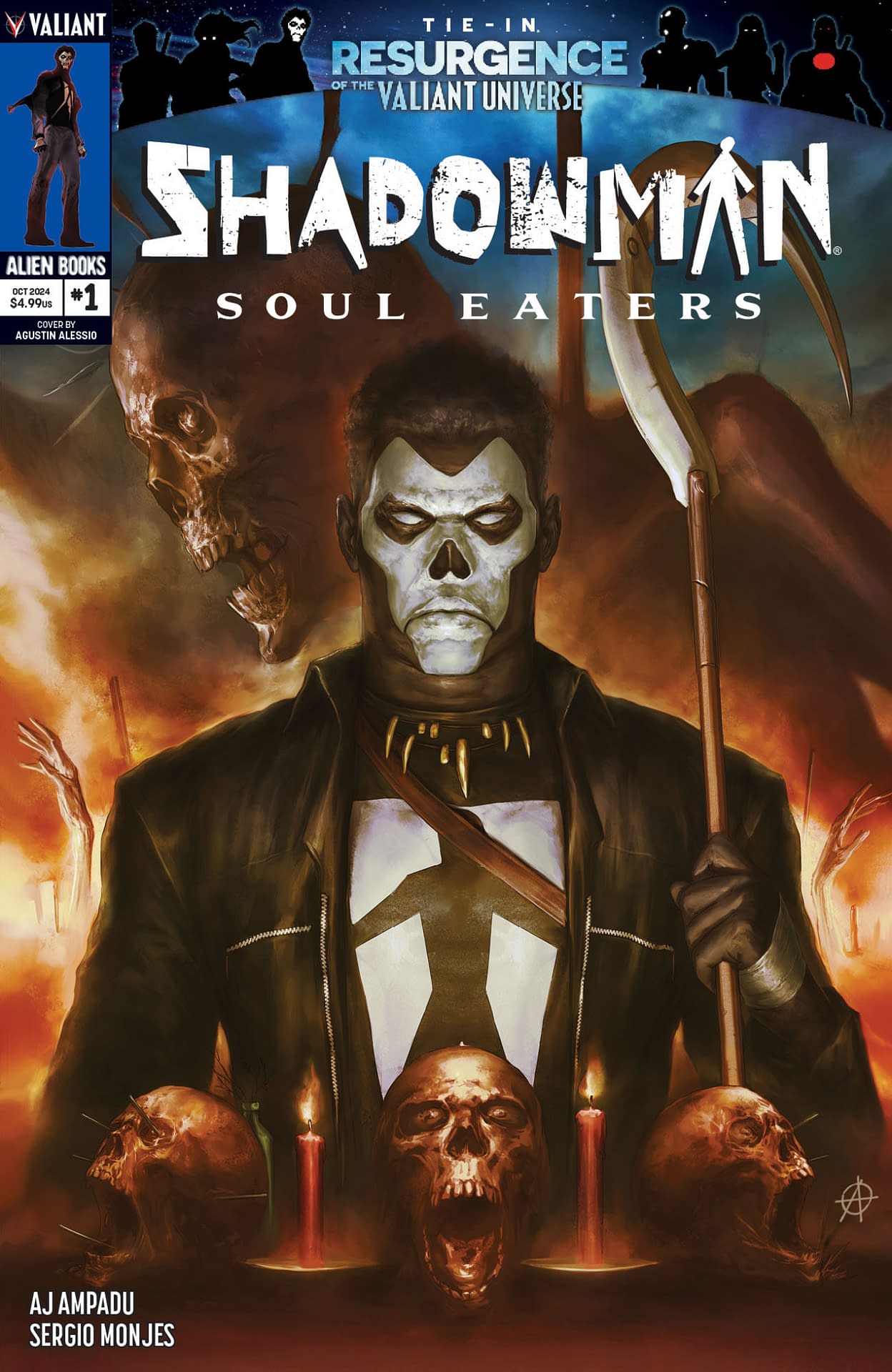
A voodoo-powered protector from New Orleans whose strength flows from spiritual ancestry. Shadowman’s narrative honors Afro-Caribbean heritage, blending horror, mysticism, and social commentary in ways that deepen our understanding of Black cosmology.
🔹 Spawn (Al Simmons)

One of the most famous Black superheroes in comic book history, Spawn is a government assassin turned hellspawn who battles for justice from the margins. His journey through damnation and redemption reflects complex questions about moral compromise, vengeance, and salvation. Spawn reminds us that not all heroes begin their stories in light—some emerge from fire.
A Future Worth Imagining
Juneteenth invites us to reflect not only on what was overcome—but on what can be built. Black superheroes do not erase pain; they transcend it. They are the dreams of the enslaved made manifest in ink, pixels, and myth. Their stories are mirrors for the young and symbols for the aging. They remind us that even in fiction, the truth of Black liberation—its cost, its beauty, and its future—remains powerfully present.
This Juneteenth, let us not only light candles and raise flags. Let us open comics, teach origin stories, and celebrate the heroes who show us that freedom can wear a cape.
References
Crenshaw, K. (1989). Demarginalizing the Intersection of Race and Sex. University of Chicago Legal Forum.
Du Bois, W. E. B. (1903). The Souls of Black Folk. A.C. McClurg & Co.
Freire, P. (1970). Pedagogy of the Oppressed. Herder and Herder.
Fraser, R. (2019, June 19). Freedom! 40 African-American Superheroes for Juneteenth. World of Black Heroes. https://worldofblackheroes.com/2019/06/19/freedom-40-african-american-superheroes-for-juneteenth/
hooks, b. (1992). Black Looks: Race and Representation. South End Press.
Nama, A. (2011). Super Black: American Pop Culture and Black Superheroes. University of Texas Press